

 See My Latest Article on HelloNation
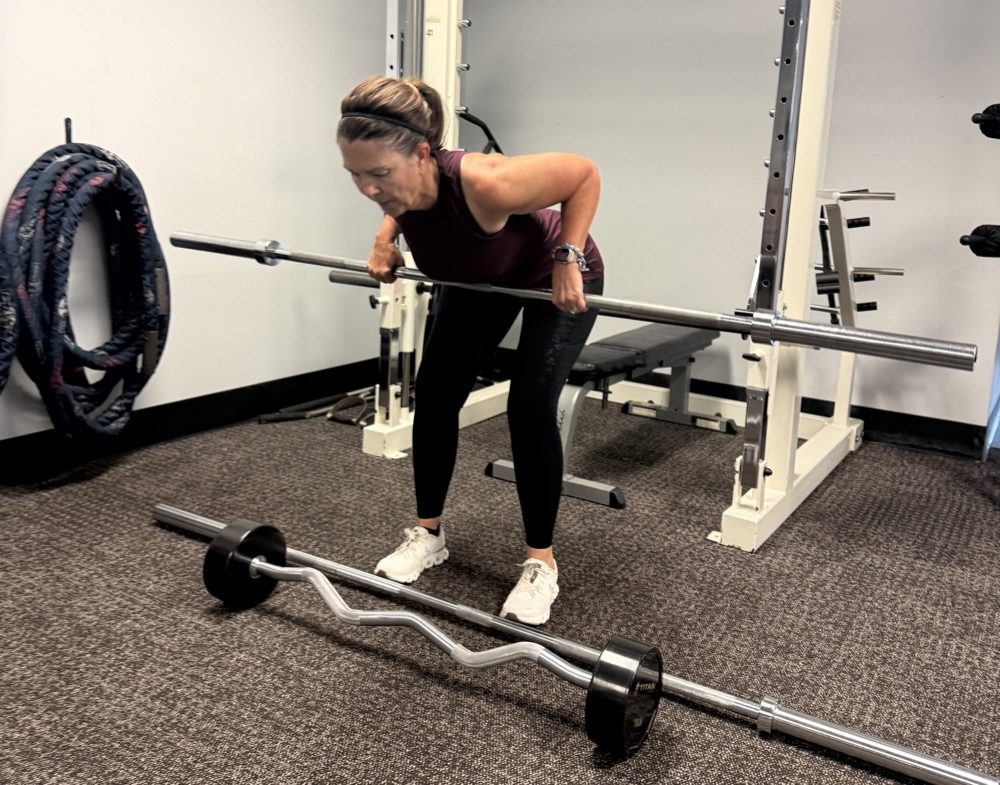
Strength training can help women over 40 preserve muscle, support bone health, improve balance, and stay capable in daily life. It does not require heavy lifting, bodybuilding goals, or a large time commitment. Exercises using body weight, resistance bands, household objects, or free weights can all be effective when performed consistently and progressed gradually.
For residents of Rochester, NY, resistance training can also support everyday activities affected by seasonal conditions, including carrying groceries, managing snow-related tasks, climbing stairs, and maintaining mobility during stretches of cold or limited outdoor activity.
Why does strength training become more valuable after age 40?
After about age 30, adults gradually begin to lose muscle mass and strength unless they challenge their muscles regularly. The pace varies, and strength training can slow this process while helping maintain physical function.
For women, the years leading up to and following menopause may bring additional changes in muscle, bone density, body composition, recovery, and energy. Strength training cannot prevent every age-related change, but it can help the body remain stronger and more resilient.
Useful benefits include:
- Better ability to lift, carry, push, pull, and climb
- Improved balance and coordination
- Support for bone strength
- Greater muscle endurance
- Improved confidence with movement
- More independence in daily activities
The goal is not simply to become stronger in the gym. It is to make ordinary tasks feel more manageable.
Can strength training help protect bones?
Yes. Resistance exercise places controlled stress on bones and gives muscles a reason to pull against the skeleton. Over time, this type of loading can support bone health and help slow bone loss.
This matters because declining estrogen levels during and after menopause can increase the risk of reduced bone density. Strength exercises may include squats, step-ups, rows, presses, lunges, and loaded carries, provided they are appropriate for the individual.
Strength training is not a substitute for medical evaluation or bone-density screening. Anyone with osteoporosis, a history of fractures, significant back pain, or another bone-related condition should ask a health care provider which movements and loading levels are appropriate.
Does lifting weights make women bulky?
Usually, no. Building substantial muscle mass requires a combination of progressive training, sufficient food, time, and individual biological factors. Most women who strength train experience gradual improvements in strength, muscle tone, posture, and physical capacity rather than sudden large increases in size.
Muscle can also affect body composition in ways that are not reflected by the scale. A person may become stronger and firmer even if body weight changes very little. For this reason, progress can be measured through everyday function, lifting ability, balance, energy, and how comfortably clothing fits—not weight alone.
How can strength training support weight management?
Strength training uses energy during the workout and supports the maintenance of muscle tissue. Muscle is metabolically active, although strength training should not be treated as a guaranteed method for rapid weight loss.
A more useful perspective is that resistance exercise helps preserve the physical capacity needed to remain active. It can make walking, household work, recreational activities, and outdoor chores feel easier. Combining strength work with regular aerobic movement, adequate sleep, and balanced nutrition generally provides broader health benefits than relying on one type of exercise.
Medication decisions, including questions about weight-management medications, should be discussed with the prescribing clinician.
Can it improve balance and reduce fall risk?
Strength training can improve the leg, hip, trunk, and upper-body strength used to recover from a trip or maintain control on an uneven surface. It works best for fall prevention when combined with balance practice and activities that challenge coordination.
Examples include:
- Sit-to-stand movements from a stable chair
- Step-ups on a secure step
- Heel raises while holding a countertop
- Supported single-leg standing
- Squats to a chair
- Carrying a light object while walking with good posture
Winter conditions make this especially practical for local households. Stronger legs and better balance do not eliminate the risk of slipping, but they may improve a person’s ability to move safely and respond to changes in footing.
What should a beginner’s routine include?
A beginner can start with two nonconsecutive strength sessions per week. Each session may include one exercise for the major movement patterns:
- Squat or sit-to-stand for the legs
- Hip hinge or bridge for the hips
- Row for the upper back
- Wall push-up or chest press for the chest and arms
- Step-up for the legs and balance
- Carry or controlled trunk exercise for the core
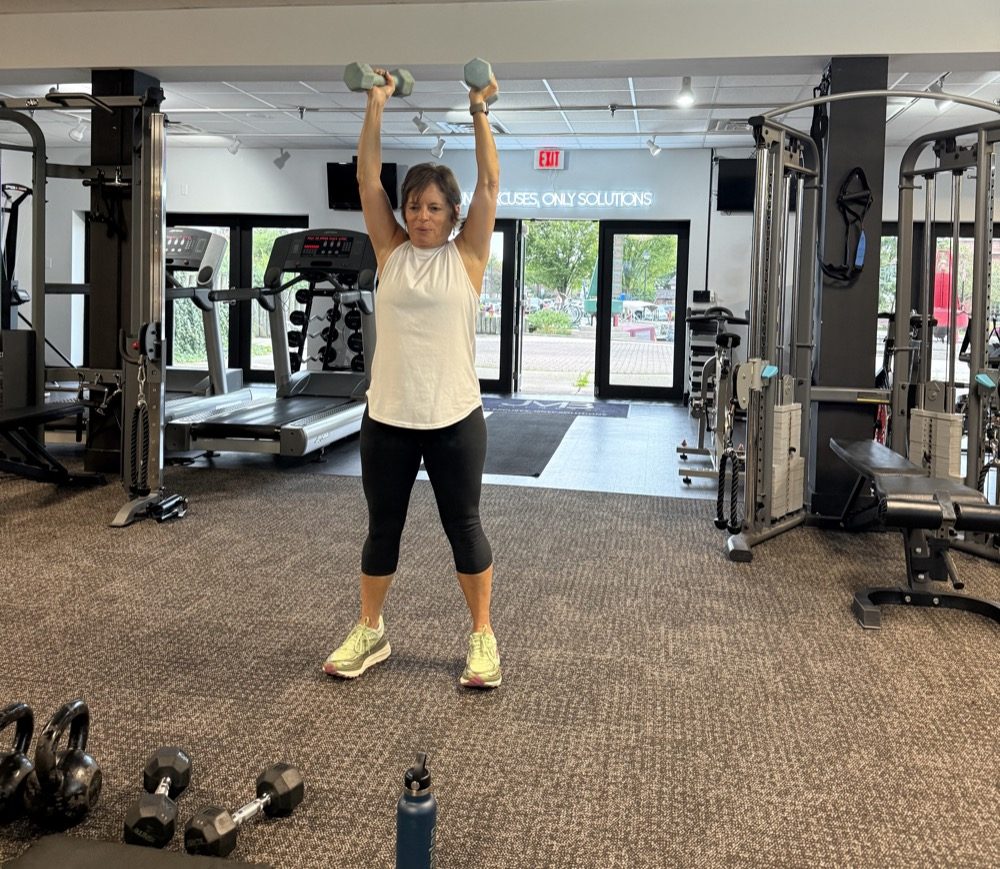
One set of approximately 8 to 12 comfortable repetitions may be enough at first. The final repetitions should feel challenging but controlled, without holding the breath, rushing, or sacrificing form. As the exercises become easier, progress can come from adding a few repetitions, using slightly more resistance, improving control, or completing another set.
A resistance band, pair of light dumbbells, or sturdy household object can provide enough challenge for many starting routines. The equipment matters less than appropriate technique and gradual progression.
How hard should strength training feel?
Moderate effort is generally appropriate for healthy adults beginning resistance exercise. A person should feel the muscles working while still being able to maintain steady breathing and controlled movement.
Muscle fatigue is different from sharp pain. Stop an exercise if it causes sudden pain, unusual joint discomfort, chest pain, dizziness, or symptoms that do not settle with rest. Delayed soreness may occur after an unfamiliar workout, but severe soreness is not required for progress.
Warm up with several minutes of easy movement and begin each exercise with a lighter version. Recovery days, hydration, sleep, and adequate food also influence how well the body adapts.
What common mistakes should women over 40 avoid?
The most common problem is progressing too quickly after a long period of inactivity. Starting with demanding workouts may increase soreness and make it harder to continue.
Other mistakes include:
- Training only visible muscles while neglecting the legs, back, and hips
- Using momentum instead of controlled movement
- Copying exercises that do not match current ability
- Holding the breath during difficult repetitions
- Treating pain as proof that a workout is effective
- Ignoring balance, mobility, and aerobic activity
- Comparing progress with younger people or experienced lifters
Consistency is more useful than occasional intense sessions. A brief routine performed regularly can be more valuable than a difficult workout that leads to several weeks of avoidance.
When should someone seek medical guidance first?
A health care provider should help guide exercise decisions when a person has known heart or lung disease, uncontrolled blood pressure, osteoporosis, a recent surgery or fracture, significant joint problems, unexplained symptoms, or a chronic condition that affects movement.
New chest pain, fainting, severe shortness of breath, or sudden weakness requires prompt medical attention rather than continued exercise.
For many women, strength training after 40 is a practical form of long-term self-care. The most useful program is one that fits current ability, respects recovery, supports daily function, and can be continued through changing seasons and life demands.