
 See My Latest Article on HelloNation
Starting a home workout routine can be simple, safe, and useful without expensive equipment. For residents of Rochester, NY, a few bodyweight exercises, a clear weekly schedule, and adjustments for winter or limited indoor space are enough to build strength, mobility, and cardiovascular fitness.
What should beginners do first?
Beginners should start with movements that train the whole body: sitting and standing, pushing, pulling, stepping, bending, and balancing. The goal during the first few weeks is to practice good form and establish a routine rather than exercise as hard as possible.
A balanced beginner session can include:
- A brief warm-up
- Two or three strength exercises
- Light cardiovascular movement
- Mobility work
- A gradual cool-down
Aim for 20 to 30 minutes, two or three days per week. On other days, short walks, gentle stretching, or ordinary household movement can help reduce long periods of sitting.
What is a good 20-minute workout at home?
A practical beginner workout can be completed in a small living room, bedroom, or other clear indoor area. Use a sturdy chair for support, but avoid chairs with wheels.
Begin with five minutes of easy movement:
- March in place
- Roll the shoulders forward and backward
- Reach the arms overhead if comfortable
- Step from side to side
- Move through gentle ankle and hip circles
Then complete one or two rounds of the following exercises. Rest for 30 to 60 seconds between movements.
1. Chair squat
Stand in front of a sturdy chair with the feet about hip-width apart. Push the hips back as if preparing to sit, lightly touch the chair, and stand again. Keep the knees pointed in the same direction as the toes.
Start with 8 to 12 repetitions. If squatting is uncomfortable, use a higher seat or reduce the depth.
2. Wall or counter push-up
Place the hands on a wall or stable counter, slightly wider than the shoulders. Keep the body in a straight line, bend the elbows, and move the chest toward the surface before pushing away.
A wall version is easiest. A counter version provides more challenge. Begin with 6 to 12 repetitions.
3. Glute bridge
Lie on the back with the knees bent and feet flat. Tighten the abdominal muscles gently, press through the feet, and lift the hips until the body forms a comfortable line from the shoulders to the knees. Lower slowly.
Complete 8 to 12 repetitions. Stop if the movement causes sharp back pain.
4. Step-back or supported lunge
Hold a wall or chair if needed. Step one foot backward, bend both knees slightly, and return to standing. Alternate sides.
This exercise can be replaced with repeated step-ups on a low, stable surface, but avoid elevated surfaces that wobble or require excessive height.
5. Marching interval
March in place for 30 to 60 seconds at a pace that increases breathing without causing loss of control. Swing the arms naturally. For a lower-impact option, tap one foot forward at a time.
Repeat the circuit once or twice, depending on fitness level and available time.
How often should beginners exercise?
A useful starting schedule is two strength-focused workouts and two or three short periods of light movement each week. Rest days are part of the plan because muscles and connective tissues need time to adapt.
A sample week might look like this:
- Monday: 20-minute full-body workout
- Tuesday: 10 to 20 minutes of walking or gentle mobility
- Wednesday: Rest or normal daily activity
- Thursday: 20-minute full-body workout
- Friday: Light movement
- Weekend: Optional walk, stretching, or recreational activity
Consistency matters more than completing a demanding workout once in a while. If two full sessions are difficult, begin with one round of exercises and add time gradually.
How can people exercise safely during Rochester winters?
Cold, icy, or snowy conditions can make outdoor exercise less predictable. Indoor workouts provide a practical alternative, especially when sidewalks or driveways are slippery. Clear rugs, cords, furniture, and pets from the exercise area before starting.

A few indoor options include:
- Marching or walking laps through a safe part of the home
- Low-impact step touches
- Bodyweight strength exercises
- Standing balance practice near a counter
- Mobility exercises for the hips, shoulders, and ankles
Indoor air can also feel dry during colder months. Drinking water regularly and allowing a few minutes for the body to warm up may make movement more comfortable. If the home is cool, wear flexible layers that do not restrict the knees, hips, or shoulders.
Do beginners need equipment?
No. Bodyweight exercises are enough for a starting routine. A chair, wall, towel, and exercise mat or carpeted surface may improve comfort, but none is essential.
If adding resistance later, household objects should be selected cautiously. A filled water container may work for some exercises, but avoid using objects with slippery handles, loose lids, or uneven weight. Resistance should be increased only when the current exercise feels controlled and does not cause joint discomfort.
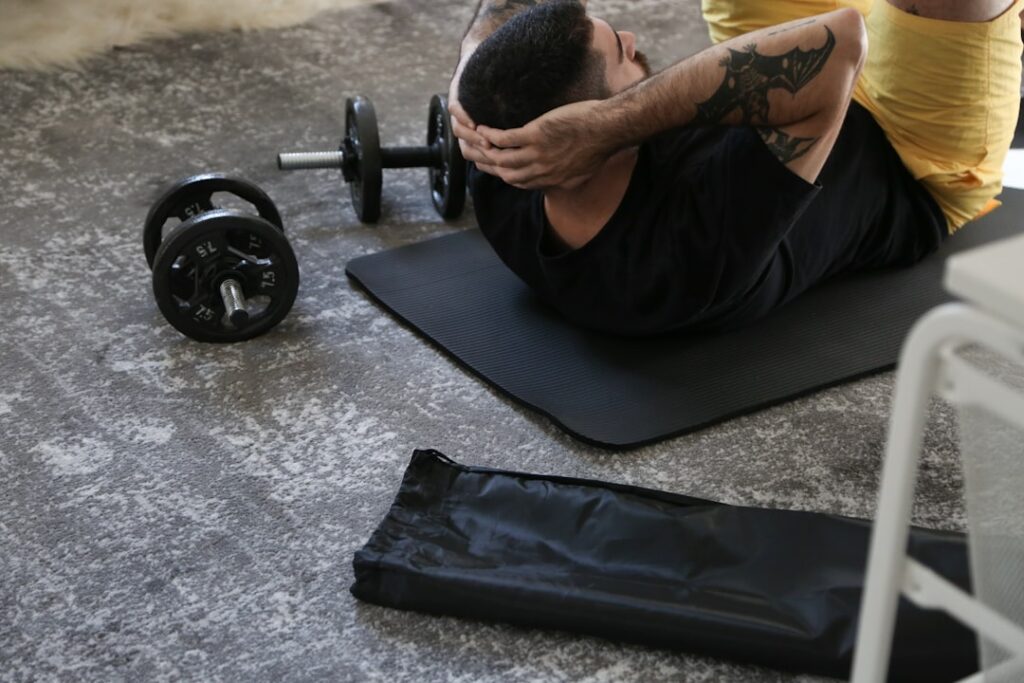
An exercise mat can reduce pressure on the knees during floor-based movements, but a folded towel may provide a similar temporary surface.
How hard should a beginner workout feel?
Most early workouts should feel moderate. A useful guide is the talk test: breathing should be faster, but speaking in short sentences should still be possible. Strength exercises may cause muscle effort and mild fatigue, but they should not create sharp pain, numbness, dizziness, or loss of balance.
The next-day feeling also provides information. Mild muscle soreness can occur after unfamiliar activity. Severe soreness, joint swelling, limping, or pain that changes normal movement suggests that the session was too difficult or the technique needs adjustment.
Increase only one factor at a time:
- Add two or three repetitions
- Add another round
- Extend a walking or marching interval
- Choose a slightly more challenging variation
There is no need to increase everything in the same week.
What mistakes should beginners avoid?
Several common habits make home workouts less effective or less safe.
First, skipping the warm-up can make the first exercises feel unnecessarily stiff. Second, moving quickly often reduces control and places more stress on the joints. Third, copying advanced routines from videos can lead to exercises that exceed current strength or mobility.
Beginners should also avoid treating soreness as proof of a successful workout. Progress is better measured by improved control, easier breathing, greater range of motion, or the ability to complete a routine consistently.
A stable surface, adequate lighting, supportive footwear, and enough space to extend the arms can make a noticeable difference.
When should someone get medical guidance before exercising?
People with chest pain, unexplained shortness of breath, fainting, significant dizziness, or a new injury should stop exercising and seek appropriate medical attention. Anyone managing a heart condition, uncontrolled blood pressure, major balance problems, or a recent surgery may need individualized exercise guidance before beginning.
For most healthy adults, starting with gentle movements and progressing slowly is reasonable. However, a workout should always be adjusted for current ability, medications, joint limitations, pregnancy, and previous injuries.
The most sustainable home routine is one that fits the household, the season, and the person’s current fitness level. A few controlled exercises performed regularly can build a foundation for more walking, stronger daily movement, and greater confidence with physical activity.